HRMS portal
The HRMS platform was designed to centralize and streamline core human resource operations within a single system. It supports employee onboarding, performance reviews, calibration cycles, document verification, and ongoing HR queries. reducing fragmentation across tools and manual processes. The objective was to build a scalable, role-aware platform that worked seamlessly for employees, managers, and HR administrators while maintaining clarity, compliance, and operational efficiency.
00

problem
HR workflows are inherently complex and often distributed across multiple systems. Key challenges included: 1. Fragmented tools for onboarding, performance, and documentation 2. High administrative overhead for HR teams 3. Inconsistent employee experiences across different HR touchpoints 4. The need to support multiple user roles with different permissions and goals The platform needed to simplify these processes without oversimplifying the underlying business logic.
solution
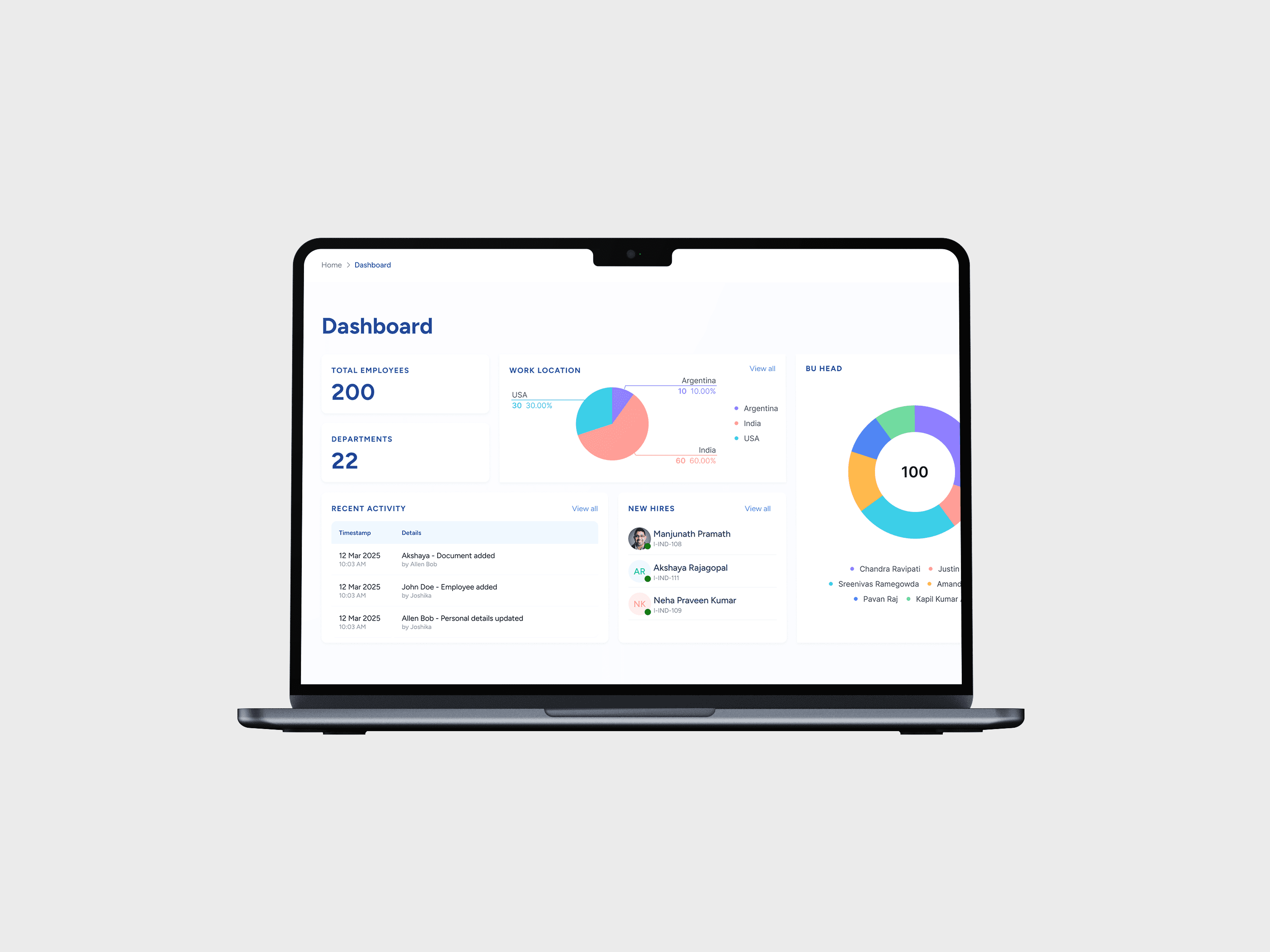
The final HRMS platform focused on a unified HR dashboard that surfaced key actions, pending tasks, and critical updates tailored to each user role, alongside structured onboarding journeys that allowed employees to complete required steps in a clear, sequential flow while enabling HR teams to track progress efficiently. It also included performance and calibration workflows designed to support transparency, fairness, and structured feedback, as well as secure document verification and centralized HR queries to minimize back-and-forth communication. Role-based access control ensured users interacted only with features relevant to their responsibilities, reducing cognitive load and operational errors.
Designed and built the HRMS platform from concept to high-fidelity design by defining the information architecture and end-to-end user flows, creating role-based experiences for employees, managers, and HR administrators, and collaborating closely with stakeholders to translate HR policies and operational requirements into clear, usable digital workflows.
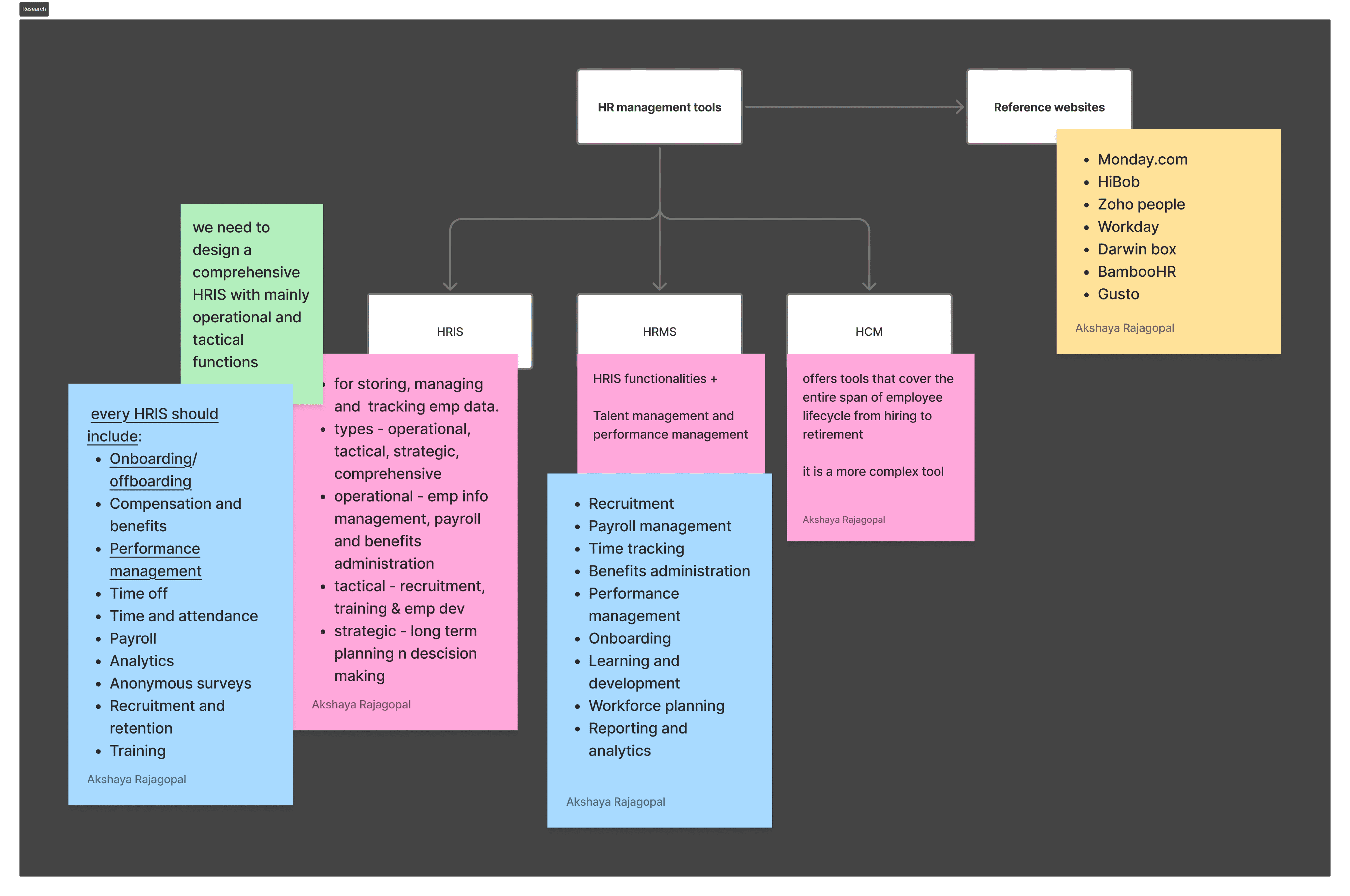
To ground the platform in real operational needs, I began with qualitative research and stakeholder conversations across multiple roles within the organization. This included HR professionals responsible for policy enforcement and documentation, directors and BU heads who would use the system for performance reviews and calibration, and employees who needed a simple way to set goals, track progress, and raise HR queries. These conversations helped surface gaps in existing tools, pain points in current workflows, and differences in expectations across user groups.
For HR teams and leadership, the primary challenges revolved around process consistency, visibility, and fairness. Performance reviews and calibration were often time-intensive, fragmented across spreadsheets and emails, and difficult to track at scale. Directors and BU heads needed clarity around goal alignment, review status, and comparative performance, while HR teams required structured workflows that adhered to policy without creating administrative overload.
Employee research highlighted a different set of needsclarity, transparency, and ease of use. Employees wanted to understand how goals were defined, how reviews progressed, and what actions were expected from them at each stage. Insights from these discussions directly informed the platform’s information architecture, role-based access, and flow sequencing, ensuring that each user experienced the system in a way that aligned with their responsibilities while maintaining a cohesive, organization-wide structure.
01
research and work flow analysis
02
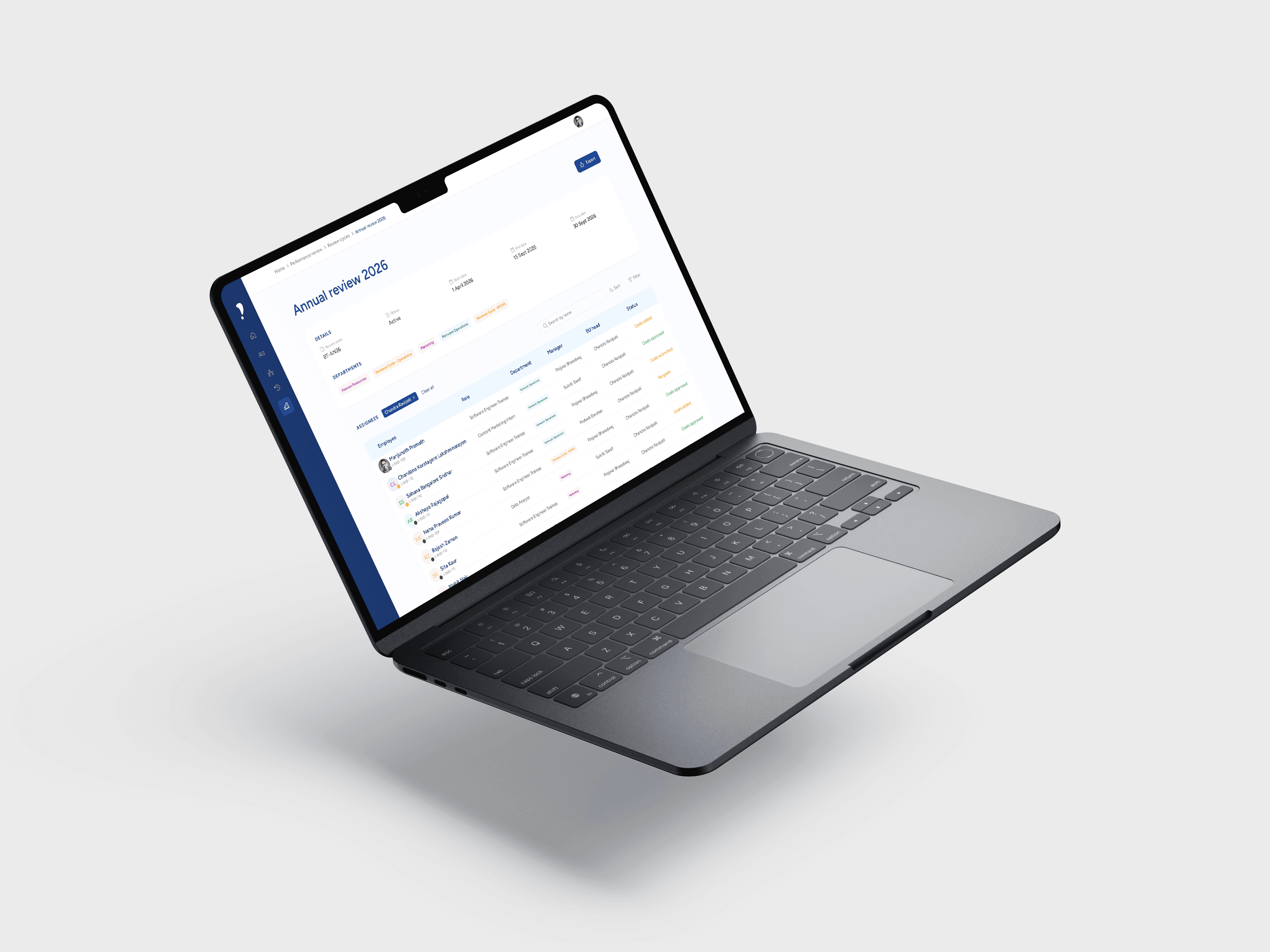
peformance review ui
The HRMS platform replaced fragmented, manual HR processes with a single, structured system supporting onboarding, performance management, calibration, document handling, and employee queries. The introduction of role-based workflows and clear status visibility reduced administrative effort for HR teams by ~30–40%, improved consistency and transparency across 100% of performance review and calibration cycles, and enabled managers and BU heads to review goals and performance data in significantly less time compared to earlier spreadsheet-led processes. Employees benefited from clearer expectations, faster goal setup and updates, and improved access to HR support, resulting in higher adoption and reduced dependency on manual HR follow-ups.
summary
This project demonstrated the importance of designing enterprise systems around real organizational roles and workflows. By grounding design decisions in stakeholder research and translating complex HR policies into intuitive digital experiences, the HRMS platform balanced operational rigor with usability. The outcome was a scalable, efficient solution that improved day-to-day HR operations while delivering a more cohesive experience across the organization.
see also